
The Evidence You Can't See While Building It
A love letter to Founders…
This week I found myself digging through old photographs from my Vanavevhu years. The producer of a podcast I had recently recorded asked for images from that chapter of my life, so I opened folders I had not looked at in years. Before I even began sorting through them, I was immediately transported back to a period of my life I do not think about often. It was a time when I was relentlessly focused on what still needed fixing, rarely pausing to acknowledge what had already been accomplished. There were greenhouses filled with vegetables, beehives supplying wax for lip balms, young people proudly displaying products they had made, soap-making workshops, market stalls, and signs advertising candles, lip balms, herbs, and vegetables produced through our social enterprise. For several hours I sat with a version of myself that felt both familiar and strangely distant. What surprised me most was not the nostalgia. It was the evidence.
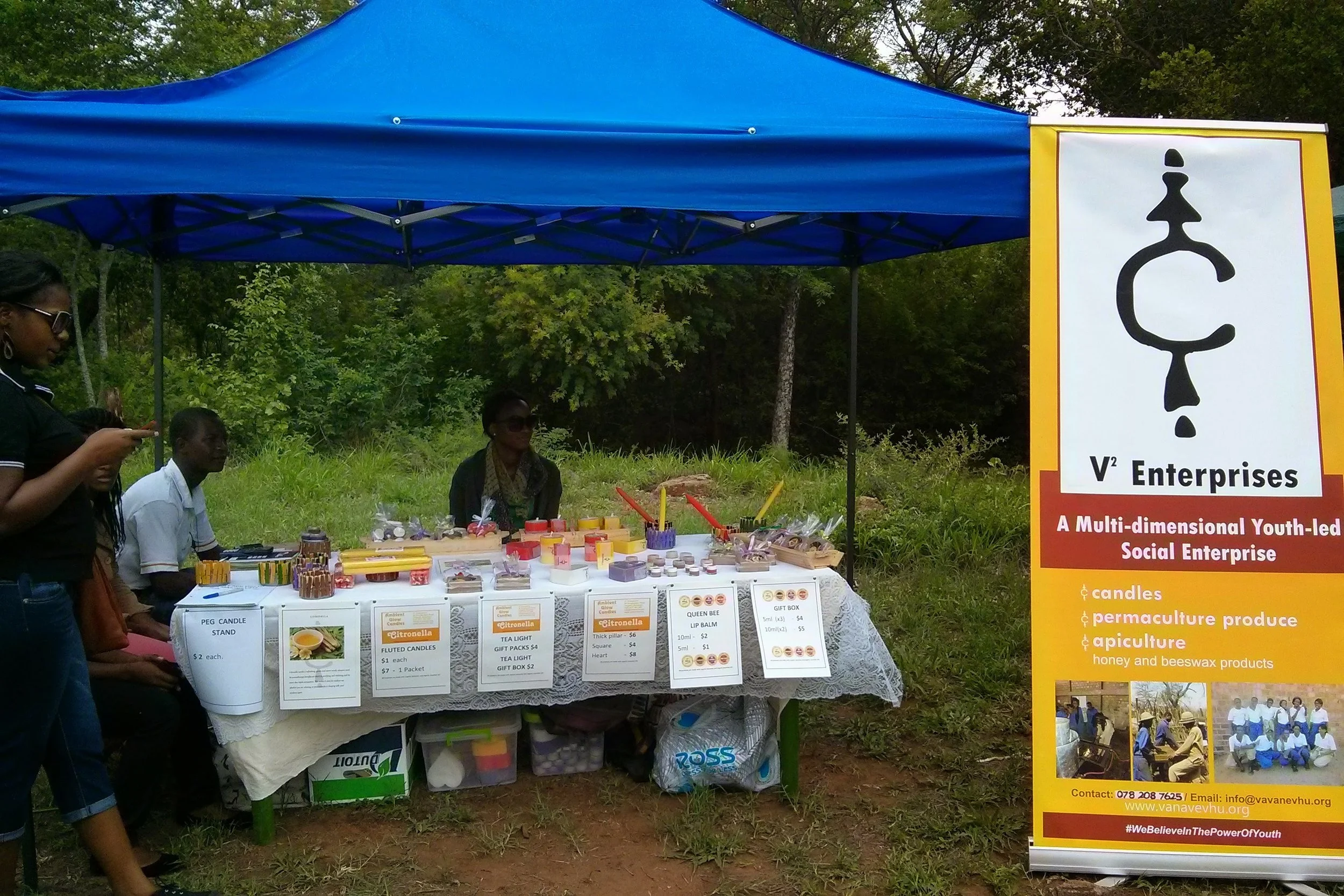
Young People Proudly displaying their products
When I was leading Vanavevhu, I rarely felt successful. Like many founders, I spent most of my time focused on what was missing. We needed more funding. We needed stronger systems. We needed additional staff capacity. We needed better infrastructure. Every milestone seemed to reveal another challenge waiting just beyond it. Even feedback from my board, offered in the spirit of strengthening the organization, often landed as evidence that I was falling short. If they raised concerns about governance, sustainability, or strategy, I interpreted those conversations as signals of failure rather than signs that the organization was growing and deserved deeper scrutiny and support. Looking back, I can see how often I confused the normal demands of building something complex with proof that I was not doing enough.
At the time, I thought this meant we were struggling. Now I am not so sure.
Years later, looking at those same photographs, I do not see an organization falling short. I see young people gaining skills. I see products being developed and sold. I see partnerships being formed. I see a community of people attempting to create something meaningful together. I see an organization that existed for eight years and touched countless lives.
Most importantly, I see something I was unable to see clearly while I was inside it. Progress.
I have been thinking about this a lot recently as I work alongside founders and organizational leaders, and whether they are leading nonprofits, social enterprises, campaigns, or emerging initiatives, I notice a common tendency: they are often remarkably poor judges of their own accomplishments. Ask a founder what is working and they will usually tell you what still needs to be fixed; ask them what they have built and they will tell you what remains unfinished; ask them how far they have come and they will describe the distance still left to travel. Their attention is so often drawn to the next challenge, the next gap, or the next opportunity that they struggle to see the significance of what has already been achieved.
This is understandable because building something from nothing requires an almost obsessive focus on what comes next. After all, a founder who becomes too comfortable can stop growing, and a founder who ignores emerging challenges can put an entire organization at risk. Yet there is another danger that receives far less attention: sometimes founders become so focused on the horizon that they lose sight of the ground beneath their feet, and in doing so they stop recognizing the evidence of their own progress, the growth of their organizations, and the impact they are already having.
What we often call imposter syndrome can sometimes be something else entirely. It can be the disorienting experience of standing in territory you have never occupied before. It can be the discomfort of carrying responsibilities you were never formally trained to hold. It can be the inevitable uncertainty that accompanies building something that did not exist before you imagined it.
The founder assumes everyone else possesses greater confidence, greater clarity, or a better roadmap, imagining that there is some hidden level of certainty or expertise that they alone have not yet reached. In reality, the situation is often much simpler and far more universal than it appears from the inside. Most people are figuring things out as they go, making decisions with incomplete information, adapting to changing circumstances, and learning through experience rather than following a perfectly mapped-out plan. The difference is that founders tend to undertake this process in public, with the weight of responsibility for an organization, a team, or a mission making every uncertainty feel more visible and consequential.
Over the years, I have come to believe that every founder is building two things simultaneously. The first is the organization itself. The second is the person capable of leading that organization. While one develops programs, systems, partnerships, and revenue, the other develops judgment, resilience, patience, and the ability to navigate ambiguity.
Neither process happens in a straight line, and both require far more grace than most founders are willing to extend to themselves. So this is my love letter to founders, not because founders are heroes, or because they are always right, or because every idea succeeds, but because I know how easy it is to spend years carrying a vision, navigating uncertainty, solving problems, and holding responsibility for others while still wondering whether you are doing enough.
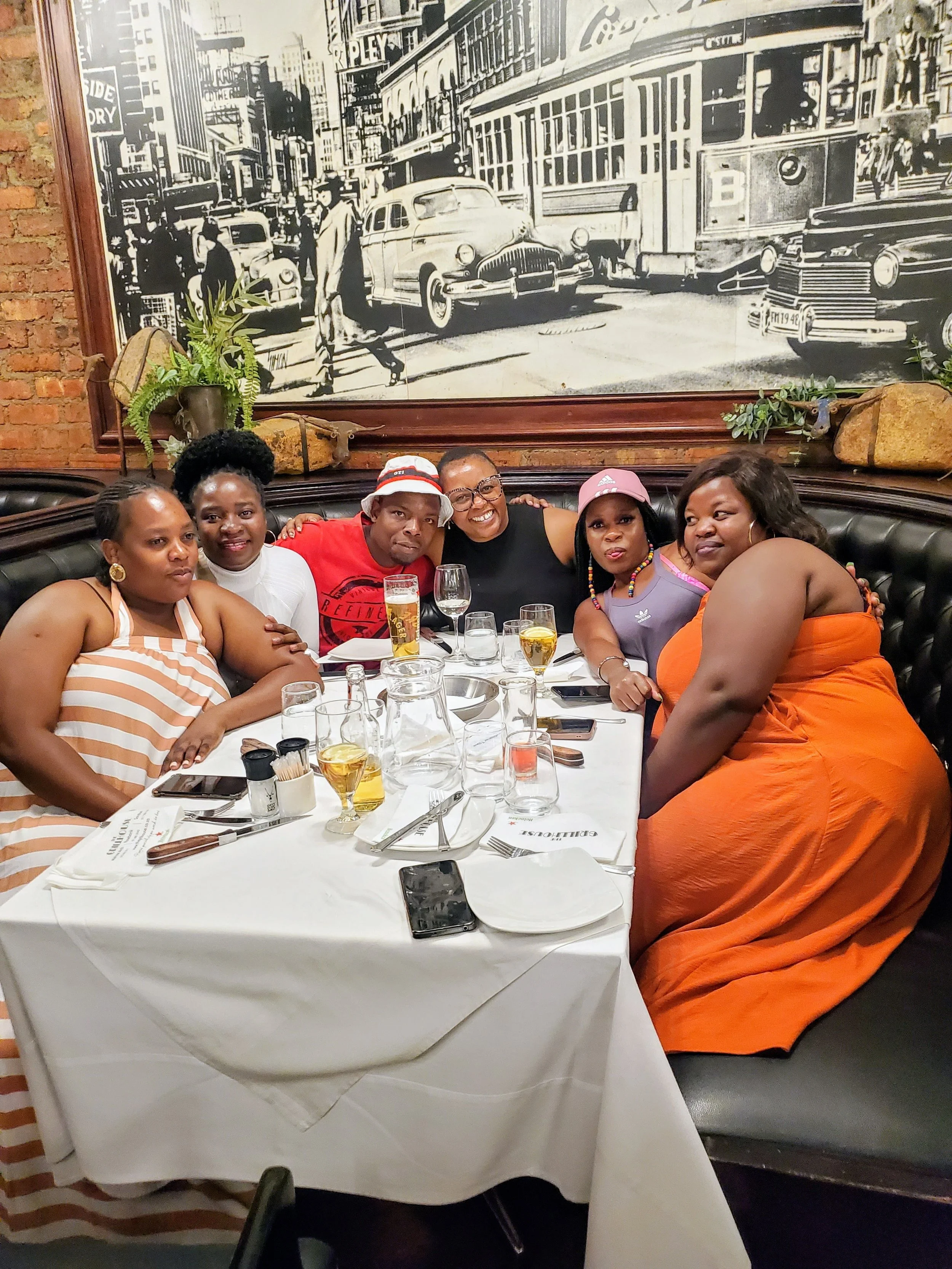
Vanavevhu 2024 reunion in Johannesburg
If you are a founder reading this, I invite you to do something many of us resist: look for the evidence. For me, some of that evidence arrived unexpectedly in 2024 when I met several former Vanavevhu youth for dinner in Johannesburg. The teenagers I had once worked alongside were now adults. Some were parents themselves. They spoke about their lives, their work, their families, and the paths they had taken since those early days. Sitting around that table, I was reminded that the true impact of our work is not always visible in reports, budgets, or strategic plans. Sometimes it reveals itself years later in the lives people have gone on to build. Take a moment to reflect on the people who have been impacted by your work, the relationships you have cultivated, and the opportunities you have created for others. Consider, too, the problems that are being addressed today because you were willing to take them on, as well as the things that now exist simply because you chose to begin. The challenges will still be there tomorrow, and there will always be more work to do, but for today, allow yourself the space to acknowledge what you have already built.
