From Philanthropy to Atonement: When Giving Becomes Governance
Written February 4, 2026
This reflection is not a rejection of giving. It is a call to examine how power moves through philanthropy, and what responsibility requires in this moment.
The data dump last weekend did not feel like justice. It felt like a machine clearing its throat.
Too much information arrived all at once, released without care, without context, and without any concern for who would have to hold it. Ordinary people spent their weekend reading, sorting, and absorbing disturbing material, doing the unpaid labor of witnessing on behalf of victims and institutions that refuse accountability. There was no aftercare and no guidance, just a flood of content that overwhelmed rather than clarified.
I respect those who chose to read anyway. To witness. To refuse forgetting. That labor matters. But I do not believe this release was designed to serve truth. It felt designed to exhaust us, to blur responsibility until everything dissolved into noise.
Rather than trying to hold the entire mess, I keep returning to one figure and one familiar pattern.
Bill Gates.
Long before his name surfaced again in this moment, he had already entered my thinking through a different doorway entirely. I encountered him while studying permaculture, environmental justice, and seed sovereignty. It was through learning about soil, biodiversity, and indigenous knowledge systems that I first encountered Vandana Shiva. Almost immediately, I learned that she was considered controversial.
That word is always revealing.
I was told she had said dangerous things about Bill Gates. That she had unfairly targeted him. That there had been a smear campaign. As a Black woman shaped by feminism, colonial history, and long pattern recognition, I knew exactly what to do next. I paid closer attention. Whenever a woman names harm and a powerful man is framed as her victim, especially when that woman is brown or indigenous and speaking about land, life, and sovereignty, my attention sharpens. History has trained me well.
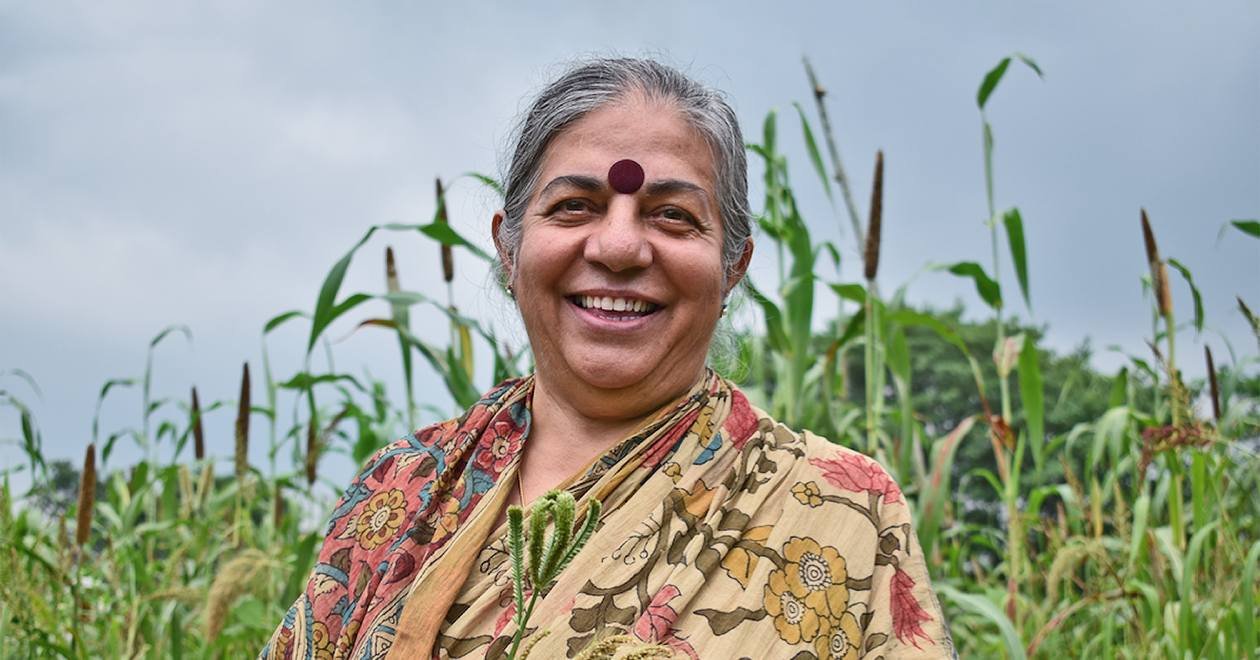
Vandana Shiva
Through Shiva’s work, I learned about seed banks, corporate control of agriculture, and the quiet violence embedded in what is often called innovation. I learned how philanthropy can function as enclosure, taking what was once held in common and returning it with conditions, branding, and control. I began an essay years ago about seeds, power, and Gates. I never finished it, but the knowing stayed with me.
There was another moment too, smaller and easier to dismiss, but just as instructive.
Sometime between 2010 and 2012, Bill Gates published an op-ed on global health. It was widely praised and described as brilliant, visionary, and evidence of his intellectual authority. So I read it.
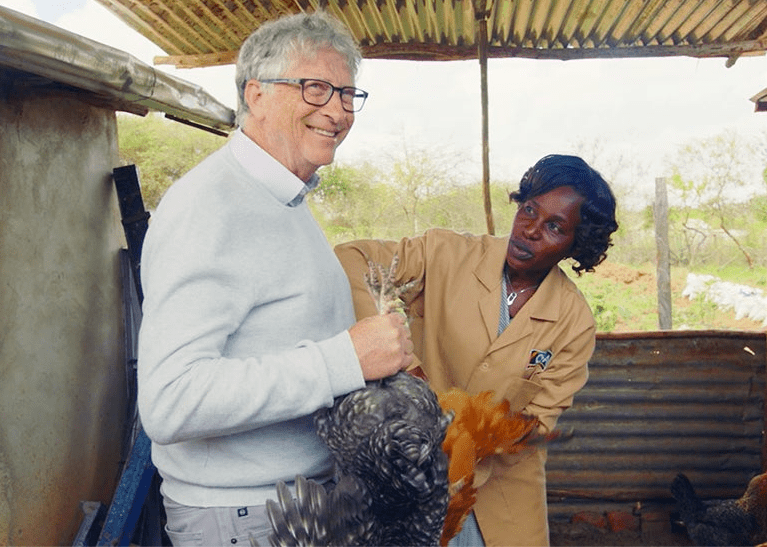
Bill Gates with a farmer in Kenya
I did not understand what was being said.
Not because the ideas were genuinely complex, but because the piece read like a word salad. It was dense, authoritative, and strangely empty. When I voiced my confusion, a boy I had a crush on at the time offered an explanation meant to close the conversation. He told me I did not understand it because it was too scientific.
I accepted that explanation outwardly, but something inside me resisted. This was a man who never finished college. Yes, Harvard, but still a dropout. And yet his writing was treated as beyond critique. We collectively pretended it made sense because calling out incoherence felt socially risky.
No one wanted to be the person who said that the emperor had no clothes.
That moment matters because it was not only about him. It was about us.
It revealed how easily we defer to wealth as a proxy for intelligence. It showed how often we override our own perception in the presence of power. It exposed how we learn to doubt our eyes, ears, and intuition rather than risk being seen as ignorant or impolite.
We have been living with these contradictions in plain sight for years.
So when we are asked again to accept minimization, casual explanations, and brushed-off proximity, I feel less shocked than tired. When I hear, “I met him because he was going to introduce me to rich people,” I cannot help but think: you are rich people. So who, exactly, was being introduced?
And why are we expected not to notice the photographs, the timelines, and the patterns that repeat themselves around men who believe power insulates them from consequence?
What unsettles me most is not the lie itself, but how intact the influence remains. This is a man who shapes global health priorities, advises governments, and helps decide which diseases matter, which solutions are funded, and which communities become testing grounds.
This is not neutral generosity. It is power.
Any money that comes with conditions is not philanthropy. If funding dictates policy, it is not generosity but governance. If giving requires compliance, it is not care but leverage. If wealth extracted through harm is recycled to manage the fallout of that harm, it is not benevolence but reputation laundering.
This is why philanthropy, as it currently operates, requires deeper scrutiny and structural reform. Not because all giving is wrong, but because conditional giving preserves the very systems that created the damage. It allows capital to present itself as savior while refusing accountability.
Perhaps it is time to rename the practice altogether. Not to abolish generosity, but to clarify responsibility.
What we call philanthropy should, in many cases, be called atonement. Atonement does not brand itself. Atonement does not set the agenda. Atonement does not demand gratitude. Atonement returns what was taken and then steps aside.
There is, however, a harder truth that cannot be avoided. Atonement is not required only of the powerful.
Those of us who learned to look away, who swallowed nonsense because it was easier than naming it, and who deferred to authority rather than trusting our own knowing also have a reckoning to face. This is not about shame. It is about responsibility.
It is about reclaiming our capacity to name what we see. It is about refusing to outsource discernment ever again.
The machinery is loud right now, but something else is happening beneath the noise. People are beginning to trust their perception again. People are questioning the moral authority of unchecked wealth. People are asking why unelected men get to shape the future of the world.
And perhaps we are finally ready to say it clearly, without euphemism or apology.
Repair must be unconditional. Anything less is not enough.